Introduction
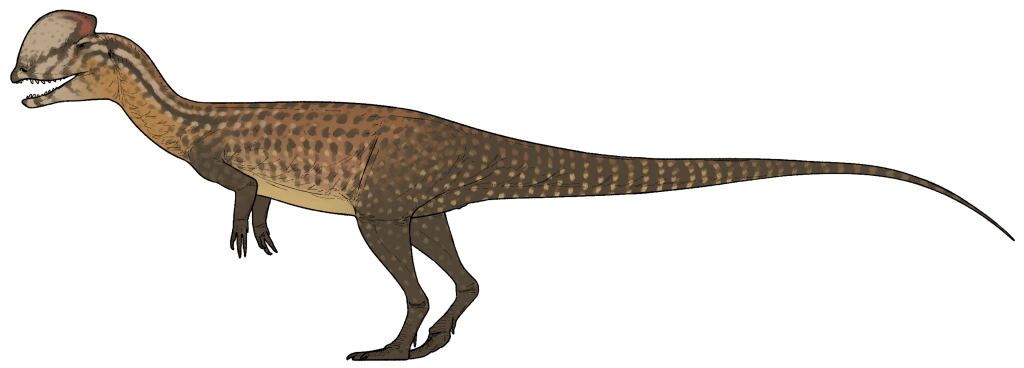
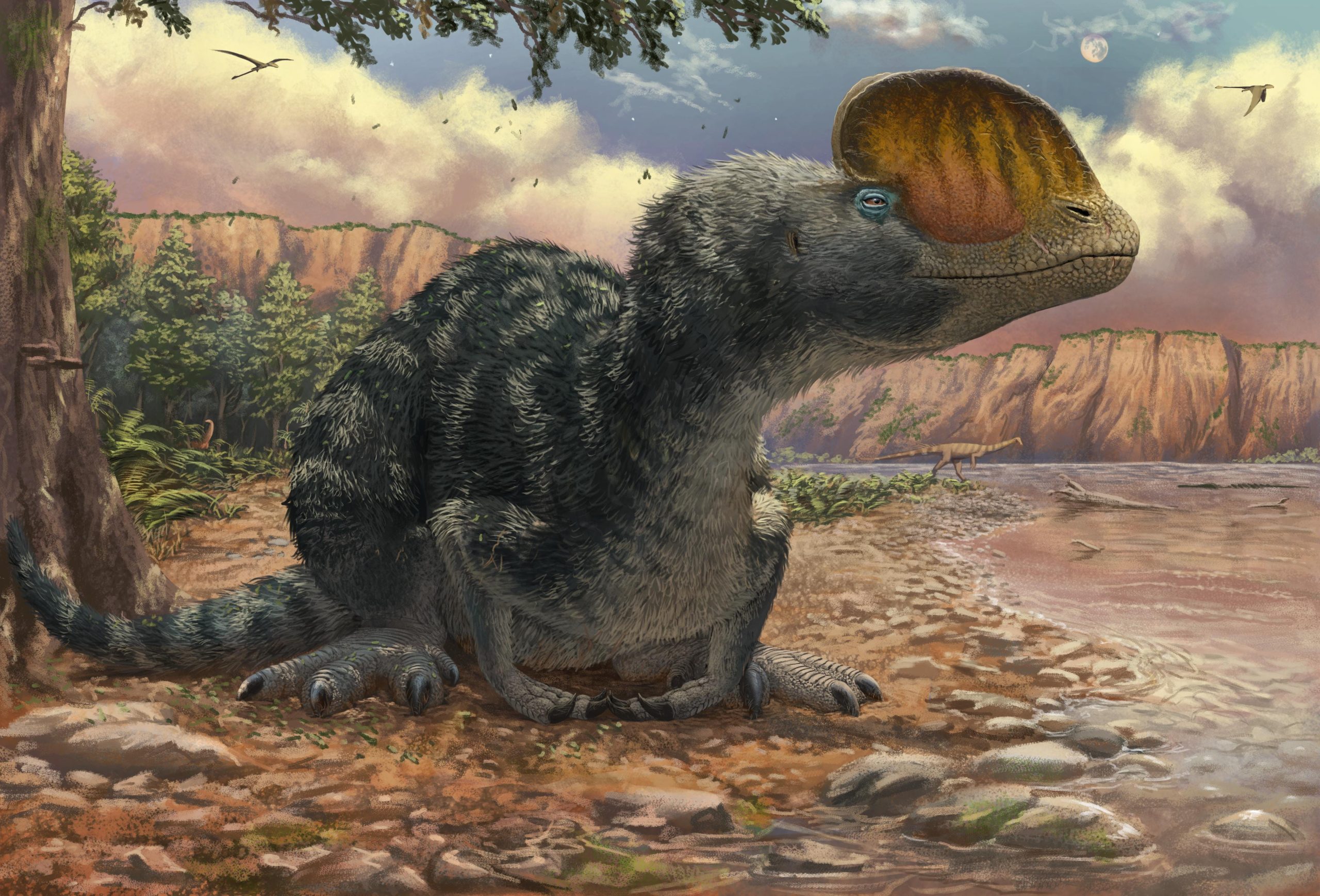
Dilophosaurus wetherilli was a medium-sized theropod dinosaur that lived in Early Jurassic Arizona, around 188 million years ago. It measured up to 23 feet in length, and stood around five feet tall at the hip, but towered over a person when standing fully upright. It weighed up to 880 pounds, about the same as an American Bison. Despite its size, Dilophosaurus was actually quite slender in build, allowing it to run at up 30 miles an hour, and turn very quickly to outmaneuver its prey. In comparison, a human’s sprinting speed is roughly 15 miles an hour. Meaning that a hungry Dilo would be able to catch up to you in seconds. Dilophosaurus was a carnivore, preying on animals like Sarahsaurus and Scutellosaurus. It was the largest land predator in North America at the time, although much larger ones would arrive long after it. Its name means “two-crested lizard”, a reference to the large and prominent twin crests on its head.
Weapons & Combat
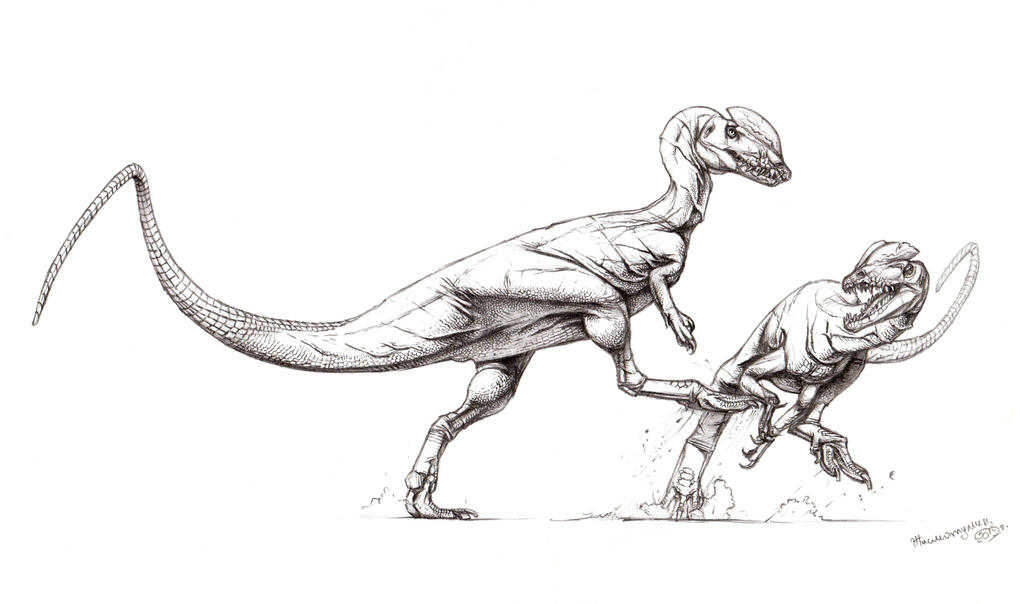
Despite being outclassed by almost everything that came after, Dilophosaurus was the apex predator of its region while it was alive, and a very effective one at that. Its snout was filled with long, serrated teeth that curved backwards, allowing it to rip and tear through its prey. These were originally thought to be used to catch and restrain fish, due to a belief of it having a weak bite force, but later discoveries disproved that notion. In fact, Dilophosaurus actually had a very strong bite force for its size, because of the muscle attachment points on its skull boosting its jaw strength. Those jaws weren’t its only weapons though, its long arms were tipped with sharp claws, which were used as powerful slashing weapons in combat. The fingers were also flexible enough to grab onto smaller prey and lift them up, both one-handed and two handed. The only thing that could stop a full-grown Dilophosaurus at the time was another one.
Courtship & Mating
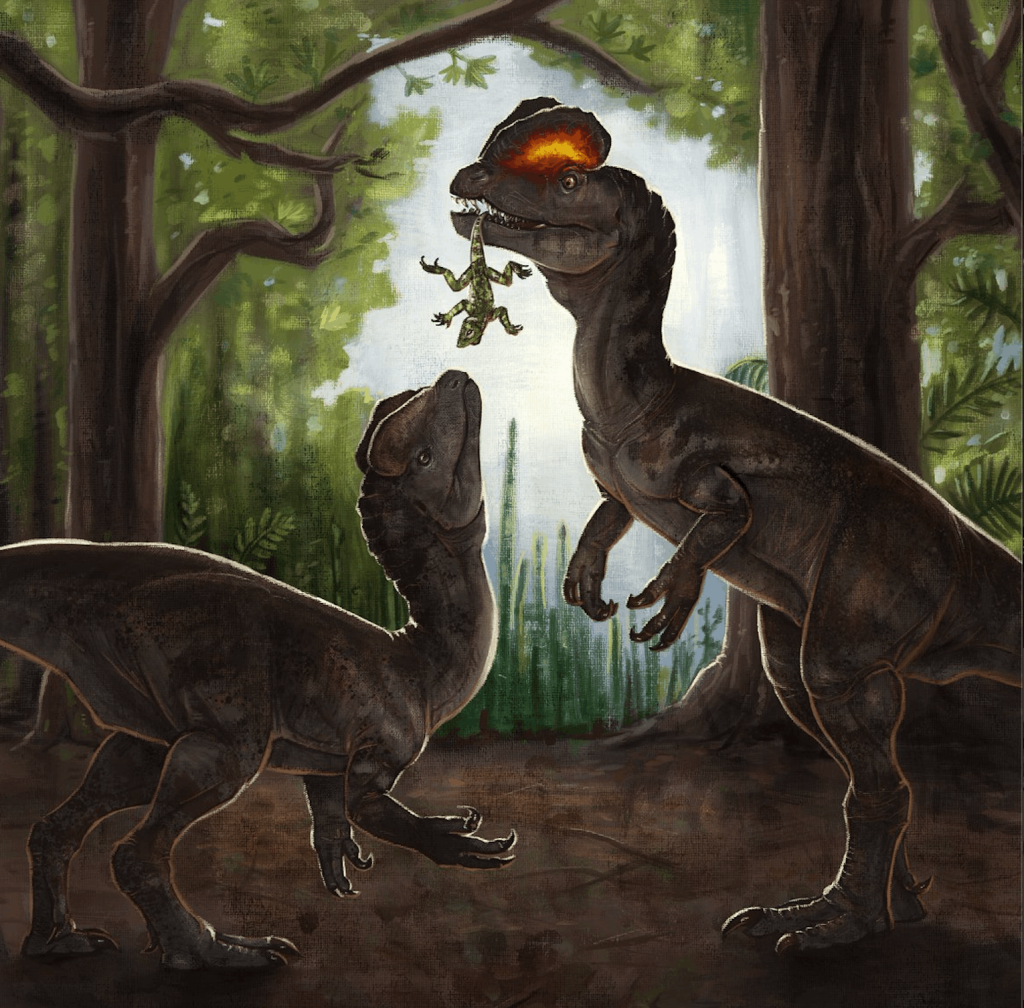
Perhaps the most distinctive feature of a Dilophosaurus are the twin crests on is head. These are large, prominent, and what really sets it apart from other dinosaurs. But, what were these used for? Well, the answer is simple, as a display feature to attract mates. The crests were covered in keratin, the material that our fingernails are made of, making them even larger than they are in the fossils. They would have been noticeable and brightly colored, especially in the males, who would have likely used them as a way of signaling their presence to others Dilophosaurus. It is possible that, just like in modern birds, females would go for the males with the biggest and brightest crests, as that is a sign of good genetics. However, this is mostly speculation based on what we know from the fossils and related species with crests like Cryolophosaurus. Baby Dilophosaurus likely did not have crests, instead they would develop them as they aged.
Discovery
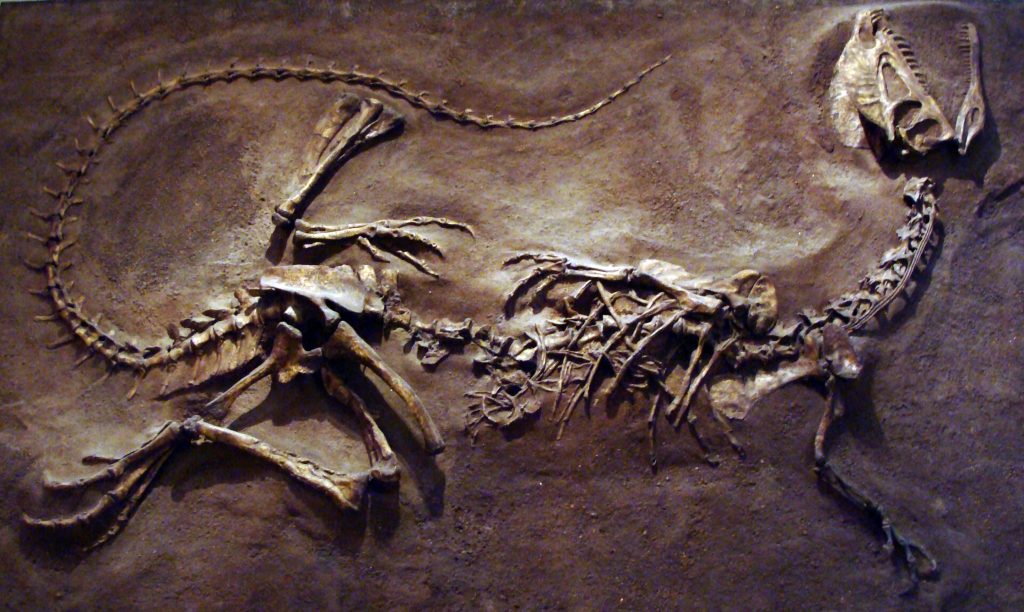
The first Dilophosaurus fossils were discovered in Arizona sometime in 1940, by paleontologist Samuel P. Welles. They were assigned to the genus Megalosaurus, as a new species of it (Megalosaurus wetherilli). This was because Megalosaurus was used as a wastebasket taxon, or a taxon that is used to dump things that could not be classified anywhere else. Paleontology was still in its infancy at the time, we didn’t know nearly as much about dinosaurs. So any theropod dinosaur discovered would just be another species of Megalosaurus, until further remains were discovered. Since we had not found the crests yet, Dilophosaurus was just another generic theropod. But in 1970, thirty years later, Welles finally discovered the fossils for the crests. These crests made it distinct enough from Megalosaurus , so the genus Dilophosaurus was born.
In Media
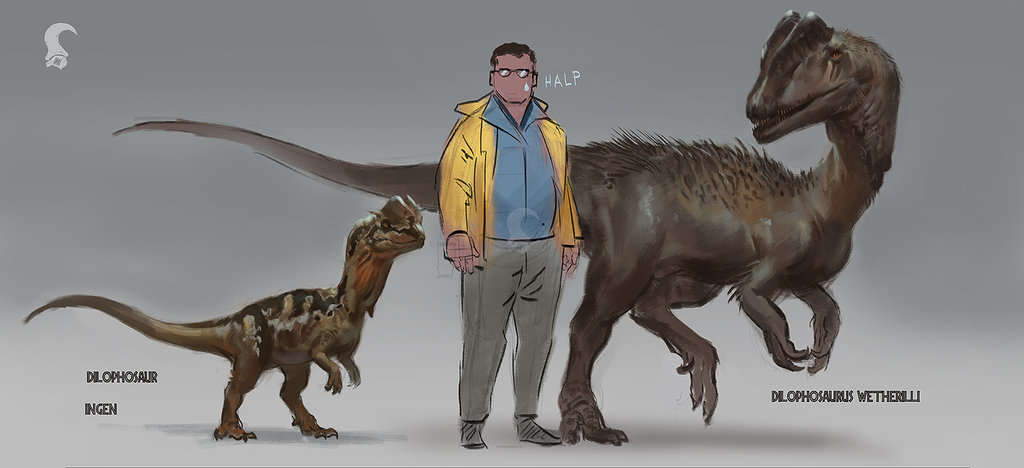
Most of you reading this probably already know Dilophosaurus from media, specifically the Jurassic Park depiction. If this is the only iteration of the genus you are familiar with, then you might be a little confused as to why I have not mentioned certain abilities that it has. Well, I hate to break it to you, but this version of the Dilo is completely fictional. In order to differentiate it from the oversized Velociraptors of the movie, Spielberg took some creative liberties, inadvertently constructing one of the most iconic speculative dinosaur depictions of all time. He shrunk it down to a mere three feet tall, slapped on a frill inspired by a Frilled Lizard, and gave it the ability to spit sticky, acidic venom. We know for sure that the real Dilophosaurus did not have any of these features, and would eat the movie version fro breakfast. But such a different take is still very interesting to think about. If you want to see a more scientifically accurate depiction of a Dilo in media, I’d suggest watching the short film Hunted By Moonlight on YouTube by David James Armsby.
Works Cited
Brown, Matthew, and Adam Marsh. “The Real Dilophosaurus Would Have Eaten the Jurassic Park Version for Breakfast.” Scientific American, 1 Jan. 2021, https://www.scientificamerican.com/article/the-real-dilophosaurus-would-have-eaten-the-jurassic-park-version-for-breakfast/. Accessed 31 Aug. 2026.
“Dilophosaurus.” Total Dino, Sept. 2025, https://www.totaldino.com/dino/dilophosaurus. Accessed 31 Aug. 2026.
—. Wikipedia, 9 Nov. 2021, https://en.wikipedia.org/wiki/Dilophosaurus. Accessed 31 Aug. 2026.
Hu, Tyler. The Function and Evolution of Cranial Crests in Dilophosaurus Wetherilli: An Analysis of Their Morphological and Behavioral Significance. 21 Mar. 2025, https://www.preprints.org/manuscript/202408.0339, 10.20944/preprints202408.0339.v2. Accessed 31 Aug. 2026.
Leave a Reply
You must be logged in to post a comment.