
From its evolution from a concept into one of multiple innovations now recognised globally across many domains, AI has become an integral part of new inventions. From its humble beginnings as chess-playing machines in the 1990s, it has become unrecognisable and continues to confound many as to where its limits truly lie. Today’s life without AI? Unthinkable, unprintable, unfathomable.
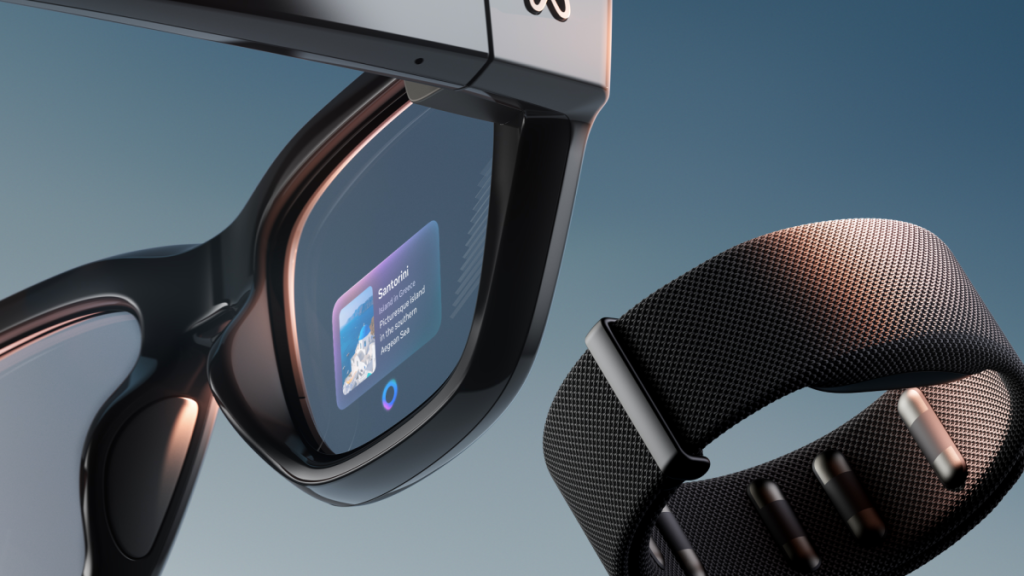
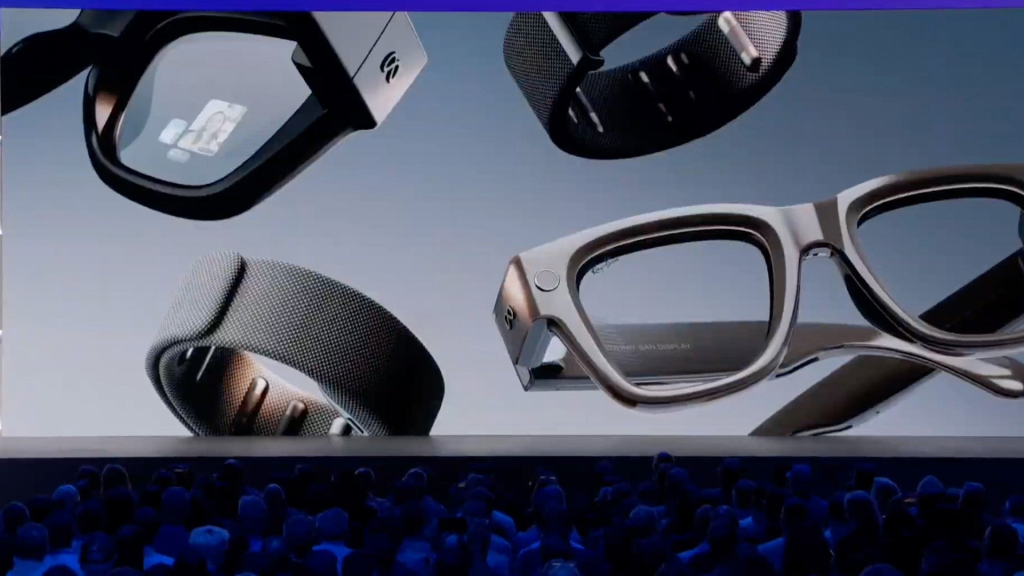
One of the main advancements of recent events is Ray-Ban Meta glasses, a significant innovation in technology and its enabling technology: AI. When it was announced and released in early September 2021, as part of a collaboration between Meta (then Facebook) and EssilorLuxottica, around the time of the new iPhone 13 series, it sent an inexorable shockwave through the tech industry, signalling that phones and similar mobile devices were no longer the new norm. What was once a sci-fi dream, previously struggling with expensive and impractical designs, has transformed into an enterprise tool within reach of consumer reality, also driven by AI integration and continuous improvements such as bug fixes and enhanced battery life with newer models lasting up to 8 hours.
The most recent Ray-Ban Meta glasses offer real-time AI access without a phone, as well as offering visual recognition and are hands-free with the use of neural technology. Additionally, it allows live translation of multiple languages and subtitle viewing, such as Spanish, French and Italian, as opposed to portable translation devices such as Google Translate by using built-in microphones to listen to speech and small speakers to play translations, along with a connected Meta application within range. In relation to online personalities, it permits easier content creation with first-person POV accessed with voice commands compared to traditional, larger filming equipment not as mobile as the Ray-Ban Meta.
Notwithstanding the future Ray-Ban Meta glasses have for the future, there remain consequences in terms of ethical, moral and societal concerns. Such examples include bystanders often being involuntarily filmed without knowledge or consent, as the glasses may prove to be a wearable surveillance device in public spaces, able to record sensitive content. In addition, a recent claim highlighted how the glasses may support a high potential for misuse, such as stalking and facial recognition, as well as privacy concerns in terms of data directly given to Meta. There have been several cases of violations of Meta’s extensive privacy policies and terms of service, where “videos, images and audio, as well as interactions with AI, are captured by the glasses, transmitted to Meta’s servers and reviewed by employees and contractors.” Moreover, health concerns arise in relation to the usage of the glasses, such as within wireless radiation, where users have reported vision and eye strain leading to headaches and nausea, dry eyes and digital fatigue, and, in particular cases, seizures or dizziness in susceptible individuals. Furthermore, the device may cause distraction, which can lead to safety hazards in public spaces.
Despite the prospects future technology holds, such as subsequent evolution of Ray-Ban Meta glasses or other advancements, including diamond-based quantum microprocessors, virtual or augmented reality, and AI agents for coding in apps, namely Spotify and project management, there are a considerable number of consequences needing to be addressed in relation to its progression.
“Success in creating AI would be the biggest event in human history. Unfortunately, it might also be the last…”
— Stephen Hawking
MLA Bibliography
Company, Facebook. “Introducing Ray-Ban Stories: First-Generation Smart Glasses.” Meta Newsroom, 12 Sept. 2025, about.fb.com/news/2021/09/introducing-ray-ban-stories-smart-glasses
Ray-Ban and Meta Launch the Next Generation of Smart Glasses. www.essilorluxottica.com/en/newsroom/press-releases/ray-ban-and-meta-launch-the-next-generation-of-smart-glasses.
Company, Facebook. “Ray-Ban Meta (Gen 2) Now With up to 2X the Battery Life and Better Video Capture.” Meta Newsroom, 18 Sept. 2025, about.fb.com/news/2025/09/ray-ban-meta-gen-2-better-battery-life-video-capture.
Harding, Cortney. “Smartglasses at Work: Productivity Dream or Privacy Nightmare?” Forbes, 3 Mar. 2026, www.forbes.com/sites/cortneyharding/2026/03/03/smartglasses-at-work-productivity-dream-or-privacy-nightmare.
“Tips for Boosting Social Media Performance With AI Glasses.” Meta, www.meta.com/ch/en/ai-glasses/social-media-performance-tips.
Vallance, Chris. ICO Writes to Meta Over “concerning” AI Smart Glasses Report. 4 Mar. 2026, www.bbc.com/news/articles/c0q33nvj0qpo.
Bagdonas, Tracy. “‘Seeing Everything’: Meta AI Glasses Lawsuit Claims Much-Touted Privacy Protections Are a Sham.” ClassAction.org, 9 Mar. 2026, www.classaction.org/blog/seeing-everything-meta-ai-glasses-lawsuit-claims-much-touted-privacy-protections-are-a-sham.
Bello, Adebowale. “Are Smart Glasses Bad for You?” Medical News Bulletin, 25 Nov. 2025, medicalnewsbulletin.com/smart-glasses-ar-ai-safety.

Leave a Reply
You must be logged in to post a comment.